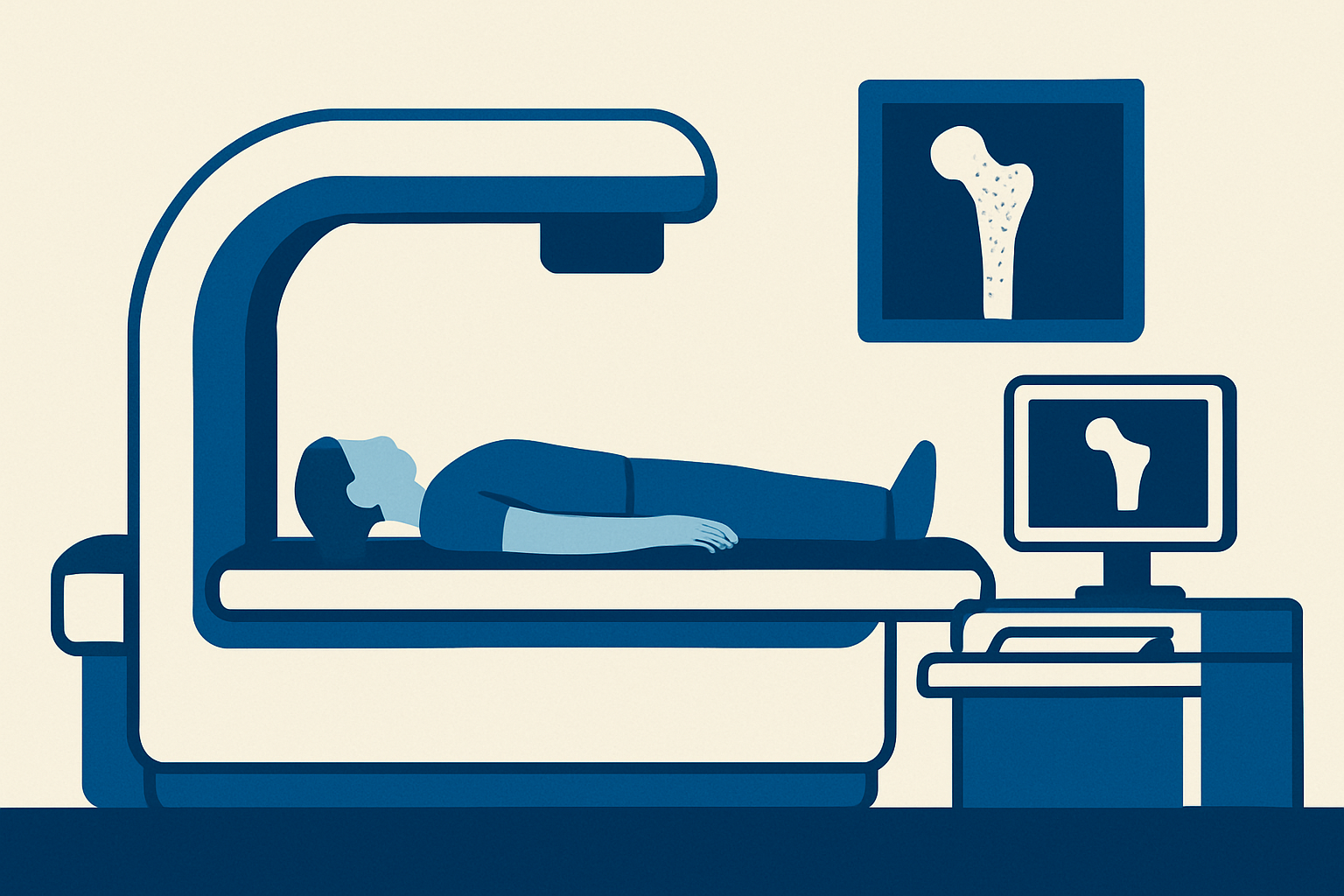
What Does a DEXA Scan Measure?
A DEXA scan, or Dual-Energy X-ray Absorptiometry scan, is a crucial tool in assessing your bone health. It measures your bone mineral density, which is essential in diagnosing conditions like osteoporosis. The scan provides two key scores: the T-score and the Z-score.
The T-score compares your bone density to that of a healthy young adult of the same sex. A score of -1 or higher is considered normal; between -1 and -2.5 indicates osteopenia (low bone mass), and -2.5 or lower signifies osteoporosis.
On the other hand, the Z-score compares your bone density to the average for someone of your age, sex, and size. A significantly lower Z-score may prompt further investigation into other underlying health issues.
Did you know? Osteoporosis affects over 3 million people in the UK, leading to more than 500,000 fractures annually.
Who Should Have a DEXA Scan?
Determining whether you need a DEXA scan often depends on several risk factors. According to NICE guidelines, the following groups are recommended to have the scan:
Post-menopausal women — oestrogen loss increases osteoporosis risk.
Men over 65 — bone density naturally decreases with age.
Individuals using steroids — long-term steroid use can weaken bones.
Those with a history of fragility fractures — previous fractures can indicate lower bone density.
Additionally, the FRAX online risk tool is a valuable resource, allowing you to calculate your fracture risk based on various factors. This can guide your decision on whether to seek a DEXA scan private UK service.
How Are DEXA Scan Results Interpreted?
Once you've undergone a DEXA scan, understanding your results is the next step. As mentioned earlier, the T-score and Z-score provide insight into your bone health:
A normal T-score suggests healthy bone density.
A T-score indicating osteopenia means your bone density is lower than normal, but not low enough to be classified as osteoporosis.
A T-score in the osteoporosis range indicates a higher risk of fractures, necessitating treatment to strengthen your bones.
Your healthcare provider will consider these scores alongside other risk factors to tailor a treatment plan that best suits your needs.
Why Consider a DEXA Scan Private UK Option?
NHS waiting times for a DEXA scan can be lengthy, often delaying the diagnosis and treatment of osteoporosis. Opting for a DEXA scan private UK service offers a more expedited pathway, allowing you to gain clarity on your bone health sooner.
Private scans can significantly reduce waiting times, giving you quicker access to a diagnosis and enabling you to start treatment without unnecessary delay. This is particularly important if you have risk factors or have experienced fractures, where early intervention can make a substantial difference.
When Should I See a Specialist?
If you fall into any of the risk categories mentioned, or if you've used the FRAX tool and received a high-risk score, it's wise to seek further advice. Additionally, if you're experiencing symptoms like unexplained fractures or significant height loss, a consultation with a specialist is recommended.
Dr. Nalin Wijesekara can provide expert guidance, helping you understand your results and develop an effective strategy for managing your bone health.
What Happens at a Private Consultation with Dr. Wijesekara?
During a private consultation, Dr. Wijesekara will review your medical history, assess your DEXA scan results, and discuss any symptoms you may have. He will take the time to explain your bone health comprehensively and the implications of your scores.
Dr. Wijesekara will work with you to devise a personalised treatment plan, which may include lifestyle changes, supplements like vitamin D, or medications to improve bone density and reduce fracture risks.
If you would like to discuss your bone health or explore the option of a DEXA scan private UK service, please consider booking a consultation. Dr. Wijesekara is committed to providing you with the highest standard of care and helping you take proactive steps towards maintaining healthy bones.